 By Danny DeCota
Singapore runs around the clock. Hospitals, hotels, airports, manufacturing plants, logistics hubs, and the food and beverage industry collectively employ hundreds of thousands of people who do not work standard nine-to-five hours. For shift workers, night staff, and those whose schedules rotate unpredictably, maintaining a consistent fitness routine presents genuine challenges that most fitness advice simply does not account for.
This article is written specifically for those people. If your schedule makes the standard gym advice feel irrelevant, it is not because fitness is out of reach for you. It is because the advice was not designed with your lifestyle in mind. Structured Workout classes, when approached thoughtfully, are one of the most effective ways for shift workers in Singapore to maintain their health, and here is how to make them work for you.
Understanding the Health Challenges of Shift Work
Before talking about solutions, it helps to understand the problem in full. Shift work, particularly rotating shifts and night shifts, disrupts the body’s circadian rhythm, which is the internal biological clock that regulates sleep, hormone production, metabolism, digestion, and even immune function. When your sleep and activity patterns shift constantly, your body struggles to calibrate itself, and the consequences accumulate over time.
Common health issues associated with long-term shift work include elevated risk of cardiovascular disease, type 2 diabetes, obesity, gastrointestinal problems, and depression. Research from Singapore’s Health Promotion Board has consistently highlighted shift workers as a group with above-average chronic disease risk.
Regular physical exercise is one of the most effective interventions for counteracting these effects. Exercise helps regulate mood through endorphin and serotonin release, improves insulin sensitivity, supports cardiovascular health, and can even help reset circadian rhythm disruptions when timed appropriately.
Why Standard Gym Routines Do Not Work for Shift Workers
The problem with most fitness advice is that it assumes a stable, predictable schedule. “Work out three times a week, preferably in the morning” is fine if you wake up at the same time every day. For a nurse finishing a night shift at 7am or a hotel manager who alternates between morning and overnight shifts, that advice is essentially useless.
Solo gym visits also require a level of self-motivation that is genuinely harder to sustain when your body clock is constantly adjusting. After a night shift, the mental effort required to walk into a gym and design your own workout from scratch is often the thing that prevents exercise from happening at all.
This is where fitness classes singapore offer a meaningful advantage. Classes are scheduled at multiple times throughout the day, often including early morning, midday, and late-night slots. The structure is pre-built, the decision-making is removed, and the social environment provides the motivational lift that shift workers often lack when exercising alone.
How to Identify the Right Class Times for Your Shift Pattern
The key for shift workers is to match class timing with your natural energy peaks rather than trying to force exercise into slots that conflict with your body’s current state.
If you are coming off a night shift, your body has been awake for eight or more hours and is producing increasing levels of adenosine, which is the neurochemical that drives sleepiness. Attempting a high-intensity class immediately after a night shift is not only ineffective but can also increase injury risk due to reduced coordination and reaction time.
Instead, consider the following approach based on your shift type:
- After a night shift: Attend a low-to-moderate intensity class such as yoga, stretch, or slow-flow Pilates on your way home or after a short nap. These formats support recovery and help transition your nervous system toward rest without the cortisol spike of high-intensity training.
- On days off following a night shift pattern: As your sleep normalises, schedule moderate-intensity classes during midday, when your body temperature and alertness are naturally higher even during readjustment.
- Before a night shift: If you have time in the afternoon, this is often the best window for higher-intensity formats. Your alertness and physical readiness are typically at a good level, and the exercise can actually help you stay more alert during the early hours of your shift.
- During split shift breaks: If your shift structure includes a meaningful break, even a 45-minute class during that window can be productive, provided you eat a small snack beforehand and allow time to cool down before returning to work.
Class Formats Best Suited to Shift Workers
Not all class types are equally well-suited to the physical demands of shift work. Here is a breakdown of formats and how they align with the specific needs of people on irregular schedules.
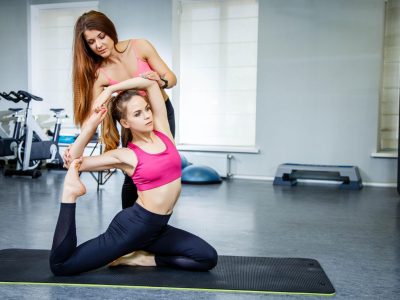
Yoga and Mindfulness-Based Classes These are particularly valuable for shift workers because they address stress regulation, sleep quality, and joint health simultaneously. Shift workers often carry significant tension in the shoulders, hips, and lower back from physically demanding roles or prolonged periods of sitting and standing. Yoga classes directly target these areas while also activating the parasympathetic nervous system, which counteracts the chronic stress state that shift work can create.
HIIT and Circuit Classes These are effective for shift workers on their better-rested days when they need to maximise fitness gains in a short time. A 45-minute HIIT class can deliver cardiovascular and strength benefits equivalent to a much longer, less structured session. The key is to reserve these for windows when you are genuinely well-rested, not as a way to “push through” fatigue.
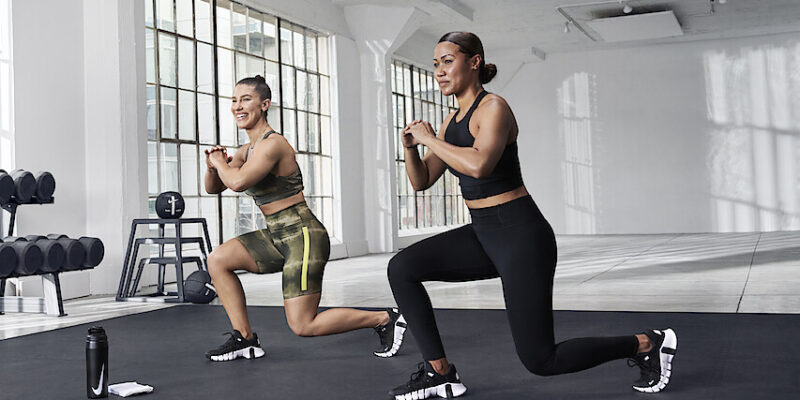
Strength and Resistance Classes These are highly recommended for shift workers in physically demanding roles such as healthcare, construction, and logistics. Building muscular strength and endurance directly reduces occupational injury risk and counteracts the postural imbalances that accumulate from job-specific movement patterns.
Aqua Fitness Classes Low-impact, joint-friendly, and highly effective for cardiovascular conditioning. Particularly beneficial for older shift workers or those with existing joint conditions, as the water reduces stress on the body while still providing meaningful resistance.
Building a Realistic Fitness Schedule Around Shift Work
The biggest mistake shift workers make when approaching fitness is trying to copy a schedule designed for someone with a regular routine. Consistency for a shift worker does not look like “Monday, Wednesday, Friday.” It looks like “whenever my current schedule allows, I choose the best available option.”
Here is a more realistic framework:
- Commit to a minimum of two classes per week as a non-negotiable baseline, even during difficult rotation periods
- Identify three or four time slots across the week that typically work for your shift pattern, and bookmark those classes in advance
- Accept that some weeks will be two classes and some will be four, and that both are valid outcomes
- Use class booking systems that allow last-minute changes without penalty, as flexibility is essential for shift workers
- Track your energy levels across your shift cycle for two to three weeks to identify your personal peak windows, as these vary between individuals
The Mental Health Dimension
It is worth addressing the mental health aspect of shift work specifically, because it is often underestimated. Shift workers have significantly higher rates of depression, anxiety, and social isolation than workers on standard schedules. The disruption to social life, the challenge of maintaining relationships, and the physical effects of chronic sleep disruption all contribute to this.
Group fitness classes address several of these factors at once. They provide structured social interaction, create a sense of community and belonging, and deliver the well-documented mood benefits of physical exercise. For shift workers who often feel disconnected from the rhythms of everyday social life, a regular class commitment can be an important anchor point.
True Fitness Singapore offers a range of class times and formats specifically designed to accommodate the diverse scheduling needs of Singapore’s working population, making it a practical option for those whose professional lives do not follow a conventional calendar.
Practical Tips for Shift Workers Starting Out
- Inform the class instructor of your shift work background so they can offer appropriate guidance on intensity and modifications
- Keep a gym bag ready at all times so that an available window can be used without the friction of preparation
- Prioritise sleep over exercise whenever a genuine conflict arises, as no fitness gain is worth compounding sleep deprivation
- Start with lower-intensity formats and build up, particularly if you are new to exercise or returning after a break
- Consider pairing up with a colleague who also wants to exercise, as shared accountability is particularly powerful for shift workers
FAQ
Q: Is it safe to exercise immediately after a night shift?
A: It depends on the intensity. Low-intensity formats such as yoga or stretching are generally safe and can even help you wind down and transition to sleep. High-intensity exercise immediately after a night shift is not recommended as fatigue significantly increases injury risk and impairs coordination.
Q: How does exercise help with the sleep disruption caused by shift work?
A: Exercise promotes the production of adenosine, which drives sleep pressure, and also supports the regulation of cortisol and melatonin rhythms. Regular physical activity, particularly when done consistently at similar points in your shift cycle, can help stabilise sleep quality even when your sleep timing shifts.
Q: Can I still build meaningful fitness if I can only commit to two classes per week?
A: Yes. Two well-chosen, consistently attended classes per week will produce meaningful health improvements over time. Consistency at a lower frequency is significantly more effective than sporadic high-frequency periods followed by complete inactivity. Think of it as a long-term maintenance of health rather than a short-term performance goal.
Q: Are there specific class formats I should avoid if I work in a physically demanding job?
A: If your job already involves significant physical exertion, such as in healthcare, construction, or logistics, avoid doubling down on the same movement patterns in your classes. If your work is physically demanding on your legs and lower back, for example, prioritise upper body strength or yoga classes on your training days to ensure recovery and reduce overuse injury risk.
Q: How do I stop feeling guilty about missing classes due to my shift schedule?
A: Reframe consistency as a long-term average rather than a week-by-week result. Shift work creates genuine constraints that are beyond your control. A missed class due to a schedule change is not a failure. It is a circumstance. The goal is to get back to your next available slot without judgment and without giving up entirely.